Brainstorming
As a Master's student taking Foundations of Technical Communication, taught by Professor George Standifer, I was tasked with one large final project. The project involved creating a 30-40 page technical report or manual on a scientific, technical, or business topic of sufficient depth. He also noted that the manual should be on a unique topic, with a full manual not already out there. At first, this project felt scary and overwhelming. With other highly-qualified individuals in the class seemingly knowing more and having a better grasp on how to make such an in-depth project. When I get overwhelmed by large projects, I start to look around and ask questions, to gain a better grasp of where I am, as well as directions I could go. Professor Standifer said it clearly to me as I was struggling to find a direction, "go to where you're passionate," with eager eyes. I looked around at my classmates to see a lot of them going in directions related to their hobbies, some of which I have never heard of, such as enamel pins. This inspired me to create a project for more than the grade or a portfolio builder. A project that I can be passionate about, becoming an ambassador and advocate for the hobby.
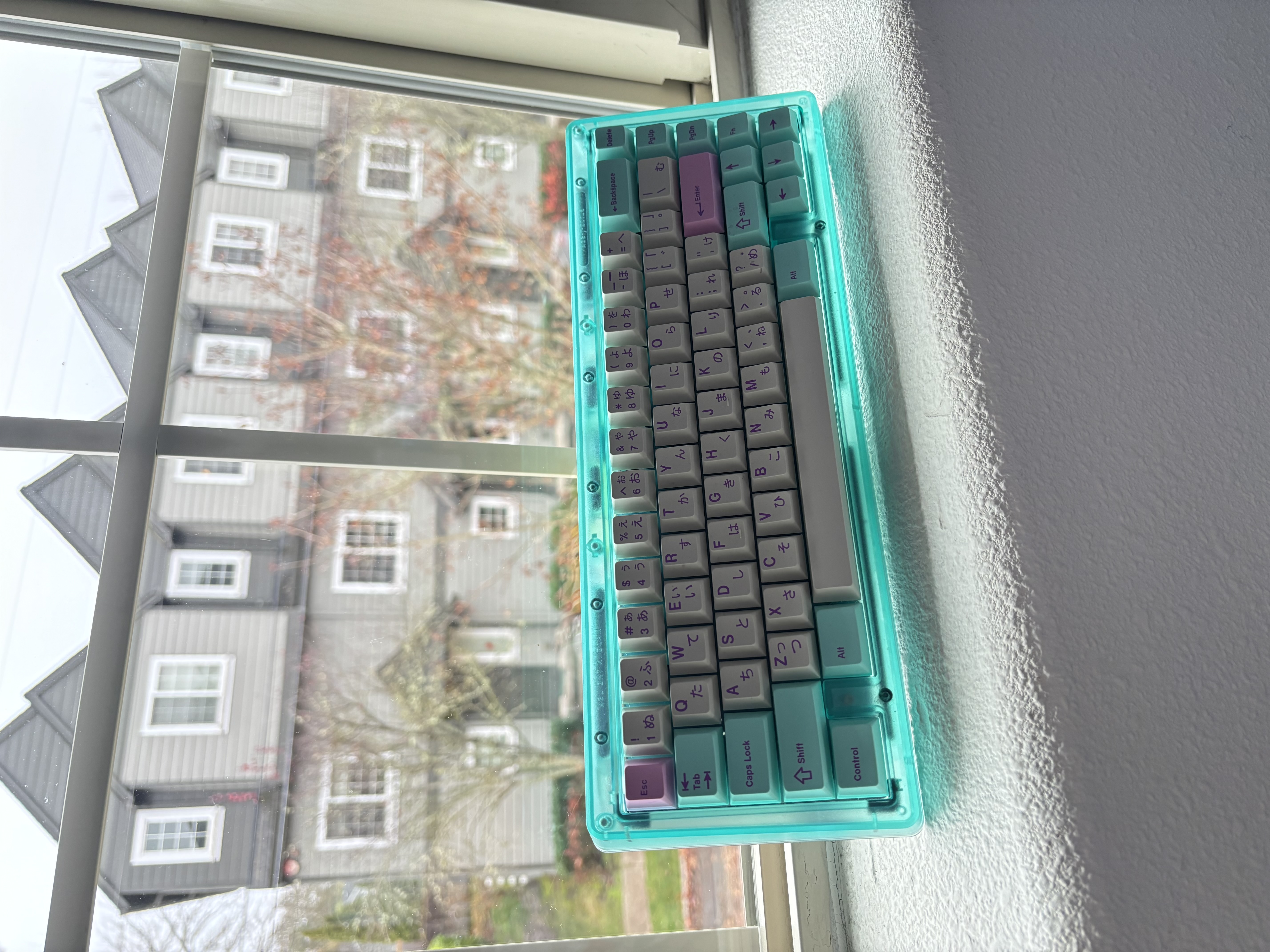

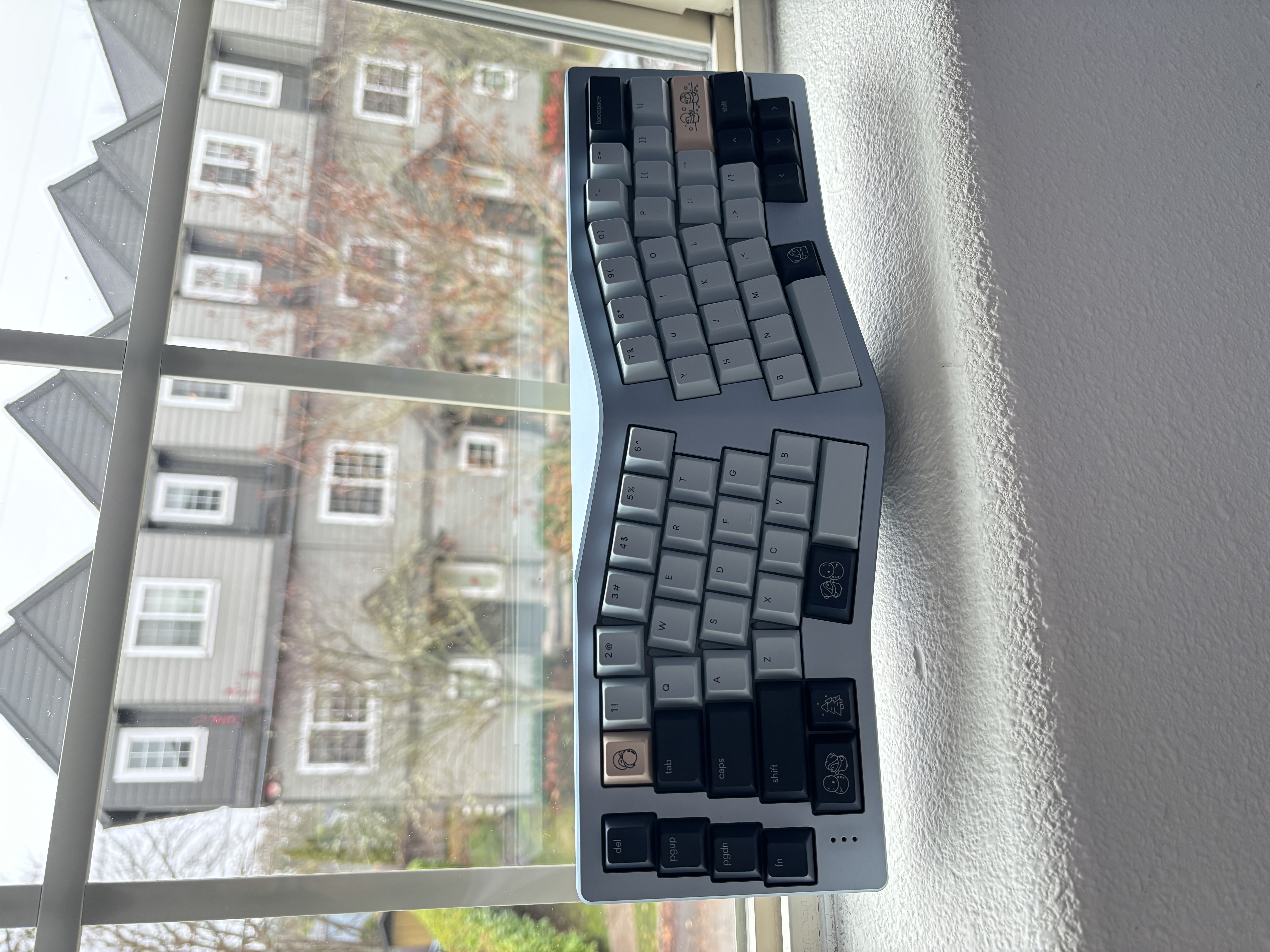
Keyboards I have built (view more)
Passion turned Project
The project I ended up going with, as you can guess, was a Keyboard manual. You can learn more about my keyboard passion here, but to sum up, it started and still is a hobby I am obsessed with. However, with deeper thought, I found the overlap between User Experience (UX) design/research and keyboard building. Thoughtful design to appeal to a large-scale vs an enthusiast audience. The research was required to determine user preferences on an individual and community scale. These are not all the aspects that overlap; however, they inspired me to continue studying User Experience and eventually turn it into a manual that is unique to the industry. A manual to build a custom keyboard that appeals to the beginner and enthusiast. Including broad knowledge about the hobby (keyboard anatomy, what to buy, etc.). As well as technical knowledge that may appeal to the enthusiast. Such as the typing feel associated with a specific mounting style, or the materials used within the keyboard, and how it affects the end result. This may sound overstated, but I wanted to create something that everyone could use, regardless of your expertise in the hobby. To do this, research in all areas of the hobby was needed.
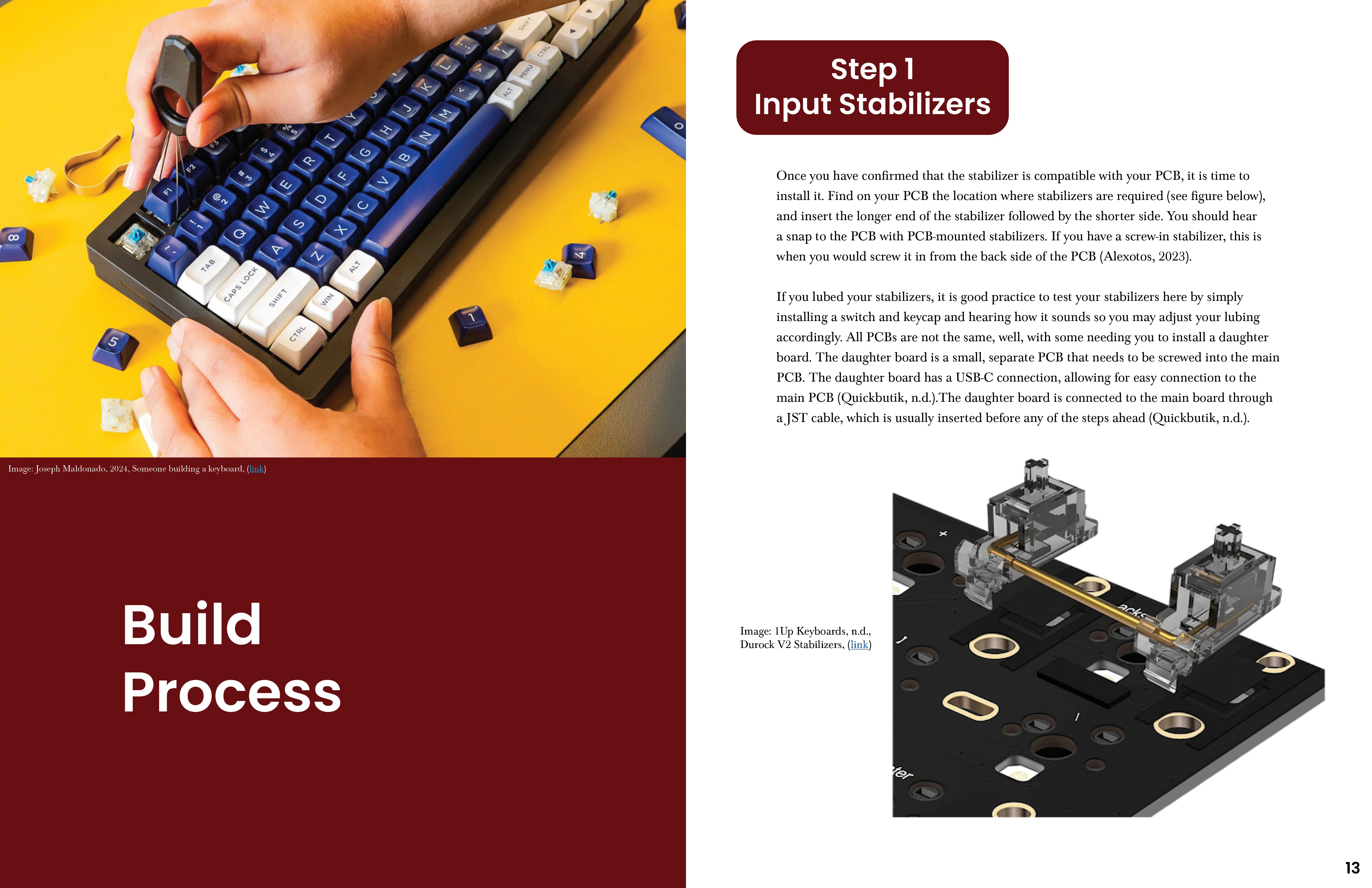
First page of the build process
Researching
Establishing a deep library of technical information about keyboards was key (pun intended) to creating an in-depth manual that holds uniqueness. When thinking about aspects of building a keyboard that goes beyond surface level (e., I started to think from the perspective of an enthusiast, rather than a designer. When first entering the hobby, I knew that one of the most confusing parts of keyboard building was its mounting style, and what it actually means for the end product. A part of my research was looking at popular keyboard kits tailored towards beginners, such as the Bauer Lite. Below is an image from Omnitype's website for the product, and although an easy-to-read specification for a beginner, it does not properly expand on it. For most beginners, this is enough information, however, for someone trying to understand the role of mounting styles, they would be confused.
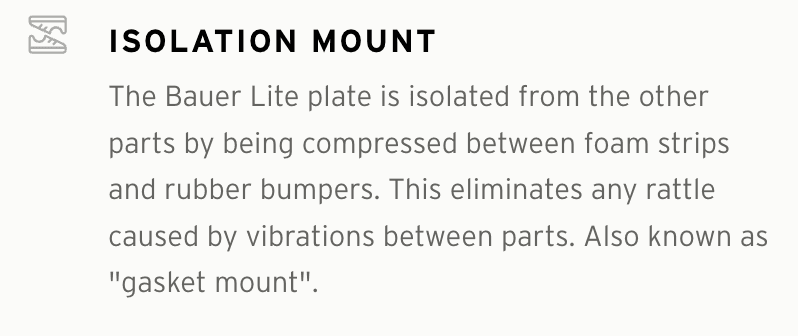
The mounting style description for the Bauer Lite by Omnitype (link)
This started me on a path to understand mounting styles as well as, from a readability standpoint, determining how to portray this information in a manual format. To ensure our topic was of scientific and technical depth, Professor Standifer required 10-page written whitepaper which could be used to supplement the final manual.
Currently working on finishing this case study. Contact me for inquiries or questions about the project!
In-progress
Keyboard
Manual
August 2025 - December 2025 | Written by Micah Watanabe
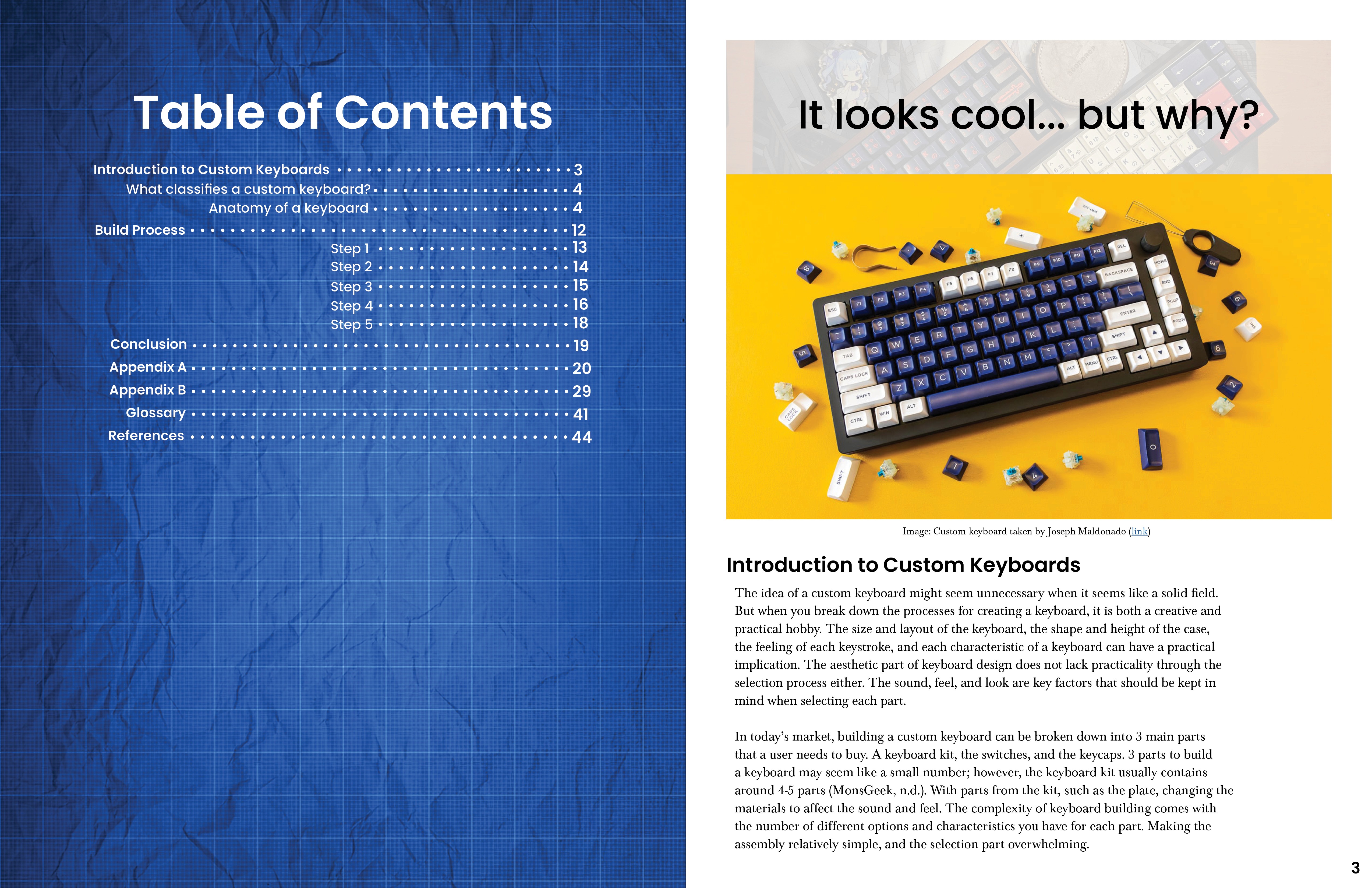
Table of Contents and Introduction (pdf)

Back to work